
Lipovite vs GLP-1 Weight Loss Injections: What You Should Know
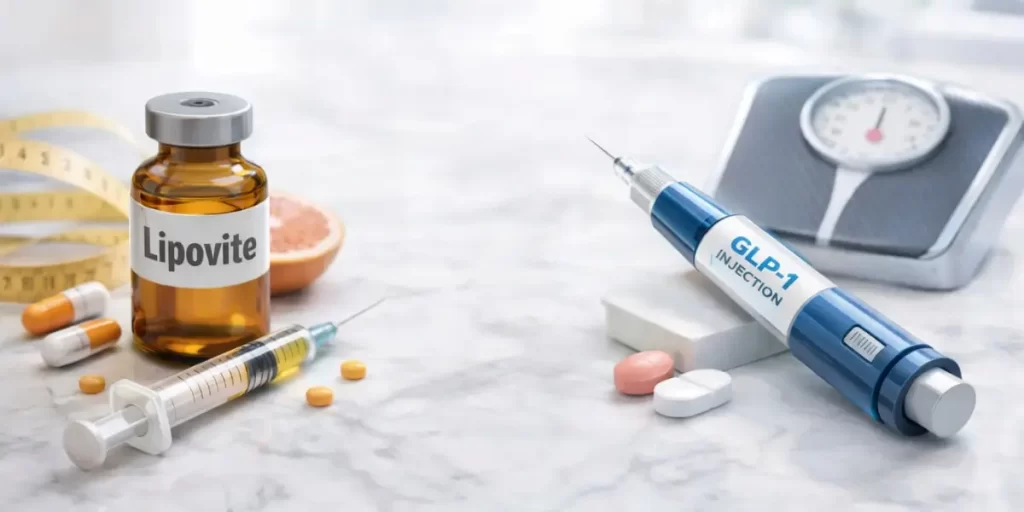
From powerful GLP-1 receptor agonists like Semaglutide, Tirzepatide and Liraglutide to traditional stimulants like Phentermine, the U.S. market offers a range of prescription weight loss injections and other options. But there’s one innovative alternative gaining attention i.e. Lipovite, a prescription-grade lipotropic injection formulated by Phoenix Meds Inc. and hence lipovite vs glp-1 comes into the picture.
Therefore in this article, we’ll compare Lipovite injection to other leading prescription injectables and help you decide which treatment might be the right fit based on your goals, tolerance, and medical profile.
What is GLP-1 and How Do GLP-1 Injections Help with Weight Loss?
GLP-1 (Glucagon Like Peptide-1) is a naturally-occurring peer in the body, which is very important in hunger regulation, blood sugar regulation, and digestion. One such weight-loss-medication is named GLP-1 Receptor Agonist, as they are similar in function to this Naturally-Occurring Peer.
Prescription injection drugs such as GLP-1 assist in weight loss through the following mechanisms by:
- Reducing appetite and food cravings
- Raising sensations of fullness
- Slowing gastric emptying
- Boosting metabolism and regulating blood sugar.
Unlike the weight management medications found in health food stores, those that use the GLP-1 mechanism are only available from a licensed medical practitioner. GLP-1 receptors has powerful effects on the body’s hormones and metabolism and that is why they are mainly indicated in patients who have a BMI of 30 or more or a BMI of 27 or more with Type 2 Diabetes, Hypertension, or PCOS.
Typical examples of anti-GLP-1 injections used for weight loss include:
- Semaglutide, a GLP-1 receptor agonist that works by reducing appetite and improving satiety
- Liraglutide, a daily injectable GLP-1 analogue commonly prescribed for long-term weight management
- Tirzepatide, a dual GIP and GLP-1 receptor agonist that is often used off-label for weight loss and may offer enhanced benefits compared to traditional GLP-1 agonists by targeting multiple metabolic pathways.
Some facilities may also provide compounding forms of some of these medications, all by licensed pharmacists. However compounding formulations are not FDA-approved and are different from brand drugs. For optimal effect, GLP-1-based therapies are always combined with healthy dietary habits, regular exercise, and lifestyle modification.

What Is Lipovite & How Is It Different?
Lipovite is a compounded prescription medication. As with all compounded drugs, it is not FDA-approved but is prepared by a licensed 503A pharmacy in accordance with federal and state regulations.
However these solution are formulated in a 503A compounding pharmacy which ensures patient-specific prescriptions with strict sterility and quality standards. Therefore in short we can say:
- Lipovite is a 503A compounded lipotropic injection which combines B12, MIC, L-carnitine and several other ingredient to support fat metabolism.
- It is a compounded prescription medication and is intended for use under the supervision of a licensed medical provider.
- Not FDA-approved as a standalone treatment for obesity and backed by medical providers and administered under supervision in clinics and weight loss centers.
This injection is significantly more affordable than GLP-1 injectables and offers nutrient-rich support enhancing overall patient wellness, not just weight loss.
However, Lipovite is not designed to replace GLP-1s but rather to support weight loss by increasing fat metabolism, enhancing liver health, and improving energy and mental clarity. It can be used as a standalone therapy or alongside prescription injectables to reduce fatigue, offset nutrient loss, and stabilize mood.
Comparing Lipovite vs GLP-1
1. Lipovite vs Semaglutide
| Feature | Lipovite (Phoenix Meds Inc.) | Semaglutide |
|---|---|---|
| Type | Prescription compounded lipotropic injection | FDA-approved GLP-1 receptor agonist |
| Mechanism | Boosts fat metabolism, liver detox, and energy levels via B12, MIC, L-carnitine | Mimics GLP-1 hormone to reduce appetite and slow gastric emptying |
| Primary Ingredients | Vitamin B12, Methionine, Inositol, Choline, L-Carnitine | Semaglutide |
| Formulated by | Phoenix Meds Inc. – 503A Compounding Pharmacy | Developed by the original patent holder and distributed under FDA-approved protocols |
| Frequency | Usually 1–2 times per week | Once weekly |
| Administration | Intramuscular injection | Subcutaneous injection |
| Weight Loss Mechanism | Fat breakdown, improved metabolism, liver health | Hormonal appetite suppression and blood sugar regulation |
| Side Effects | Mild nausea in some patients | Nausea, vomiting, constipation, pancreatitis, gallbladder issues |
| Cost | More affordable (especially for cash-pay patients) | Often $1,000+ per month without insurance |
| Availability | By prescription through select medical providers or telehealth | FDA-approved and widely available via prescription |
2. Lipovite vs Tirzepatide
| Feature | Lipovite (Phoenix Meds Inc.) | Tirzepatide |
|---|---|---|
| Type | Prescription lipotropic injection (compounded under 503A pharmacy regulations) | FDA-approved dual incretin receptor agonist (GLP-1 and GIP) |
| Mechanism of Action | Enhances fat metabolism, supports liver detoxification, and increases natural energy levels | Mimics GLP-1 and GIP hormones to suppress appetite, slow digestion, and regulate blood sugar |
| Primary Use | Weight loss, energy enhancement, and metabolic support | Approved for type 2 diabetes; commonly prescribed off-label for weight loss |
| Key Ingredients | Vitamin B12, Methionine, Inositol, Choline (MIC), L-Carnitine | Tirzepatide (dual GLP-1/GIP receptor agonist) |
| Formulated/Compounded By | Phoenix Meds Inc. (503A Compounding Pharmacy) | Originally developed and manufactured by the patent-holding pharmaceutical company |
| Injection Type | Intramuscular | Subcutaneous |
| Frequency | 1–2 times per week, based on provider guidance | Once weekly |
| Side Effects | May include mild soreness or allergic reactions | Common: nausea, vomiting, constipation; Rare: pancreatitis, thyroid tumors |
| Cost | Lower-cost option; generally under $300/month for self-pay patients | Typically $1200–$3,200/month if uninsured |
| Best For | Patients seeking a natural, nutrient-based option for metabolic and liver-supportive weight loss | Individuals with type 2 diabetes, obesity, or insulin resistance requiring strong hormonal appetite suppression |
3. Lipovite vs Liraglutide
| Feature | Lipovite (Phoenix Meds Inc.) | Liraglutide |
|---|---|---|
| Type | Prescription lipotropic injection (compounded under 503A guidelines) | FDA-approved GLP-1 receptor agonist used for weight management and diabetes care |
| Mechanism of Action | Supports liver detoxification, promotes fat metabolism, and boosts natural energy through key nutrients | Mimics the GLP-1 hormone to reduce appetite, slow digestion, and improve insulin regulation |
| Primary Ingredients | Vitamin B12, Methionine, Inositol, Choline (MIC), L-Carnitine | Liraglutide |
| Formulated/Compounded By | Phoenix Meds Inc. (503A Compounding Pharmacy) | Developed and marketed by its original manufacturer under FDA approval |
| Administration | Intramuscular injection | Subcutaneous injection (once daily) |
| Frequency | Typically 1–2 times per week, as prescribed | Administered daily |
| Target Users | Adults looking for a gentle, nutrient-based approach to metabolic weight loss | Adults with obesity (BMI ≥30) or overweight (BMI ≥27) with weight-related health conditions |
| Side Effects | Possible sensitivity to B12, temporary flushing, increased energy, allergic responses | Common: nausea, diarrhea, headache; Rare: pancreatitis, gallbladder disease |
| Cost | Costs vary by provider and region, but Lipovite is generally more affordable than GLP-1 therapies for self-pay patients | Usually ~$1,300/month if not covered by insurance |
| Best For | Individuals who prefer a nutrient-driven approach supporting liver and metabolic health | Those needing FDA-approved GLP-1 therapy with clinical appetite regulation effects |
Note: All above comparisons are provided solely for educational purposes to help patients understand differences between LipoVite and other prescription weight loss options.
Key Takeaway: Lipovite versus other Prescription Weight Loss Injections
Choose Lipovite if you’re looking for cost effective formula that’s affordable, and compounded by a 503A pharmacy.
Pick Semaglutide if your provider recommends a GLP-1 therapy and you’re managing obesity-related medical conditions like diabetes or insulin resistance.
Tirzepatide may be more appropriate for patients with type 2 diabetes, insulin resistance, or those requiring stronger hormonal regulation for appetite and blood sugar control. As always, the right option depends on your individual health profile and goals.
Liraglutide may be more appropriate for individuals needing daily, appetite-suppressing hormonal treatment and are prepared for potential GI side effects.
Which Prescription Weight Loss Injection Is Right for You?
Choosing the right prescription weight loss injection depends on your individual health status, goals, tolerance, and preferences. Each medication offers distinct benefits but they also come with trade-offs, and how your body responds to different treatments.
If you’re battling obesity or need aggressive appetite suppression due to metabolic disorders, medications like Semaglutide, or Liraglutide may offer faster results. But often it come with gastrointestinal side effects and higher costs.
However Tirzepatide may be best for dealing with type 2 diabetes, obesity, or stubborn metabolic issues especially when natural or lifestyle-based options haven’t been enough.
But, Lipovite may be a strong contender If you’re looking for a natural, nutrient-driven approach that supports metabolism and liver function with minimal side effects. It combines a list of vitamins and nutrients clinically associated with Enhanced fat metabolism, Increased energy levels and Liver detoxification.
Whether you’re just starting your weight loss journey or seeking a safer, affordable, and customizable injectable, Lipovite may be the ideal fit for your treatment plan.
Talk to your provider before beginning any injectable weight loss medication. Lipovite or otherwise-consult your licensed healthcare provider. Together, you can choose the most suitable path tailored to your metabolism, lifestyle, and health conditions.
Frequently Asked Questions
1. How is Lipovite different from Semaglutide?
Unlike Semaglutide, which belong to the group of GLP-1 receptor agonists, Lipovite acts by means of metabolic support provided by the use of lipotropic factors. Lipovite prevents fatty Liver issues and also helps to increase the flow of Liver energies.
2. Can You Combine Lipovite with Other Treatments?
Yes many U.S. clinics combine Lipovite with Semaglutide or Phentermine or weight loss medications and employed within a physician-supervised weigh loss program
3. Is Lipovite available over the counter?
No, Lipovite is a prescription drug compounded by a 503A compounding pharmacy and not to be used outside of the guidance of a physician.
4. Are there side effects of using Lipovite injections?
Lipovite is generally considered safe. However, there may be mild injection site reactions and feelings of more energy. A doctor should always be consulted before taking any injections for weight loss.
5. Is Lipovite covered by insurance?
Generally, most health care packages don’t cover Lipovite because it has been considered to fall under the category of health or weight loss supplements rather than any health treatment necessity.
6. Can I buy Lipovite online?
Lipovite is a prescription medication and therefore must be obtained from the prescribing provider only.
7. Are discounts available when buying in bulk?
Yes it is only applicable for vendors such as weight loss clinics, care centers, who are rendering their services to clients by providing weight loss therapy and medications.
Final Thoughts: Lipovite’s Role in Modern Weight Loss
Lipovite is not a magic bullet but it remains as one of the most valuable tools for weight loss and fat metabolism support especially suitable for:
- Patients who can’t tolerate GLP-1s
- Those seeking affordable, nutrient-rich metabolic support
- People already on GLP-1s looking to boost energy and reduce side effects
If you are looking for weight loss medication with a nutrient-rich formula, one that can be tailored and reasonably priced, you may consider Lipovite. While this supplement is not meant to be a substitute for powerful GLP-1 medications, it certainly is a well-rounded supplement with much to offer. Be sure to ask your physician about this supplement before starting it.
Doctors considering Lipovite injections for their weight loss clinics and/or patients can talk to us directly. Phoenix Meds Inc. offers high-quality Lipovite solutions for weight loss clinics, hospitals, and wellness providers in the United States.
We primarily deliver LipoVite to licensed physicians, healthcare practitioners, acupuncturists, and chiropractors.
Resources/ Suggested Reading:
What is LipoVite? An Introduction By Phoenix Meds Inc.
Launching a Lipovite Injection Service in Your Clinic: A Step-by-Step Guide
Are Lipovite Injections Safe? Side Effects and Safety Information
Partnering with the Right Lipotropic Injection (Lipovite) Supplier: Maximizing Clinic Efficiency
Lipovite and Energy: Can It Really Help With Fatigue?
The 10 Key Ingredients of Lipovite Injection: A Phoenix Meds’s Formulation
Lipovite vs MIC: A Comprehensive Comparison for HCPs
Beyond Weight Loss: The Unseen Benefits of Lipovite for Liver Health and Detoxification
Lipovite Versus B Complex injections: What’s the Difference?
Before And After LipoVite Injections: What To Expect During It?
Lipovite Vs Semaglutide: Which One Should You Choose?
Lipovite vs Tirzepatide: Effectiveness, safety, cost, and suitability
How Clinics Can Bundle Lipovite With Other Services to Maximize ROI
Lipovite vs Liraglutide: Which Is More Effective for Weight Loss?
Lipovite vs Dulaglutide: Which Injection Works Best for Weight Loss?