
What Is GHK-Cu? A Clinician’s Guide for Skin Regeneration & Wound Healing
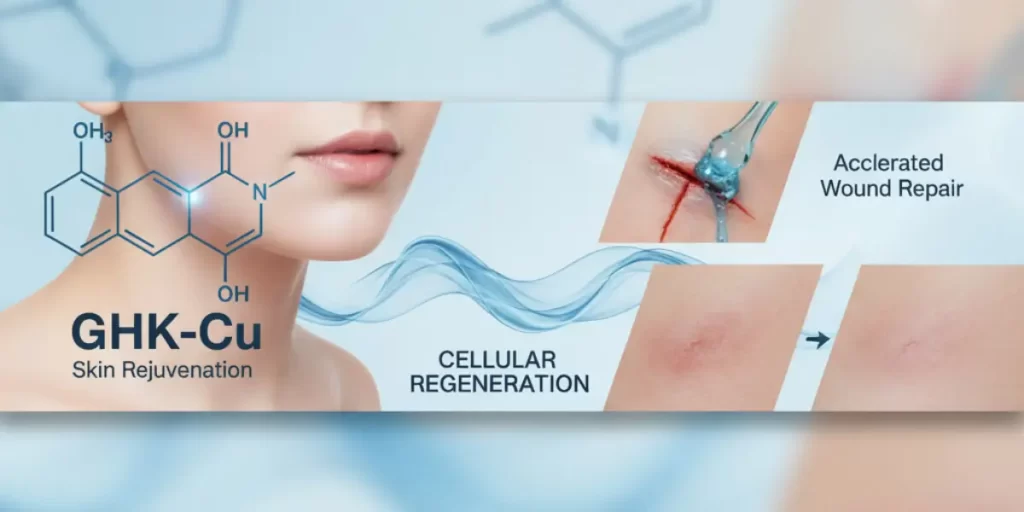
If you’re running a clinic, spa, or aesthetic practice and you’ve been hearing whispers about GHK-Cu injections, especially from clients asking if it’s the next big thing in skin rejuvenation – then this is for you.
Let’s cut through the noise. No jargon overload. No fluff. Just clear, simple, real talk about what GHK-Cu actually is. We will also deal with how it works and why clinicians are getting curious about it. And where it fits (or doesn’t fit) in your practice today.
Think of this as your friendly neighborhood medical supplier walking you through everything you need to know before you even think about stocking it or offering it to patients.
What exactly is GHK-Cu?
GHK-Cu stands for Glycyl-Histidyl-Lysine + Copper. It’s a naturally occurring copper-binding peptide found in human plasma, saliva, and urine. Yes, your body already makes it. And yes, levels drop as we age – which is part of why researchers got interested in it for anti-aging and healing.
Discovered back in the 1970s by Dr. Loren Pickart, GHK-Cu was first isolated from human plasma. He noticed something wild: when older tissue was exposed to blood from younger people, it started acting younger. Turns out, GHK-Cu was one of the key players behind that effect.
So it’s being studied for everything from wound healing to skin tightening to hair growth. But here’s the kicker. It’s widely used in skincare topicals and some injectable formulations in medical spas, but it’s not currently FDA approved as a drug for injection in the United States. That’s important, which we will look below.

How GHK-Cu actually work?
Imagine your skin is like a construction site. Collagen and elastin are the steel beams and scaffolding. Fibroblasts? They’re the workers laying down new material. As we age, those workers slow down. The foreman (your genes and signaling molecules) isn’t shouting orders as loudly. Things start to sag, thin, wrinkle.
This is where GHK-Cu come in. It doesn’t just sit there looking pretty. It gets to work:
• Signals fibroblasts to wake up and start producing more collagen, elastin, and glycosaminoglycans (like hyaluronic acid).
• Helps remove damaged proteins and tissues – think of it as calling in the cleanup crew before rebuilding.
• Attracts immune cells and stem cells to injury sites – super helpful in wound healing.
• Reduces inflammation – which is huge, because chronic inflammation = aging accelerator.
• Boosts antioxidant activity – helping your skin defend against daily environmental damage.
In super simple terms? GHK-Cu acts like a project manager for skin repair. It doesn’t do the building itself. It just makes sure everyone on the team is doing their job – and doing it well.
A Quick Breakdown of What it Does:
| What GHK-Cu Does | Why It Matters for Skin & Healing |
|---|---|
| Stimulates collagen | Firmer, plumper skin; better scar remodeling |
| Boosts elastin production | Improves elasticity; reduces sagging |
| Increases hyaluronic acid | Better hydration; smoother texture |
| Attracts repair cells | Faster wound closure; less scarring |
| Calms inflammation | Less redness, irritation; supports long term healing |
| Enhances antioxidant defense | Protects against sun, pollution, oxidative stress |
Pretty impressive for a tiny peptide, right?
What are it’s real benefits?
Before we dive into clinical applications, let’s ground it in what the research actually shows. Most of the data actually comes from lab studies (in vitro) and animal models. And some come from human clinical trials but it is in smaller scale. So it is promising, but no massive phase 3 drug trial are available yet.
That said, here’s what multiple peer reviewed papers have observed:
• In aged skin models, GHK-Cu increased collagen production by over 70 percent.
• In wound healing studies, it accelerated closure rates and improved scar quality.
• In photoaged skin (think: sun damage), it visibly improved texture, fine lines, and firmness after consistent use.
• Some early studies show it may help with hair regrowth by waking up dormant follicles.
One fun fact: GHK-Cu has actually been used in FDA cleared wound dressings. So while the injectable form isn’t approved, the molecule itself has a safety track record in other delivery methods.
Where are clinics using GHK-Cu today?
Most commonly GHK-Cu is being used by Medical spas and aesthetic clinics usually via subcutaneous micro-injections or micro needling with GHK-Cu serums. Think of it as part of a skin rejuvenation cocktail alongside things like vitamin C, hyaluronic acid, or growth factors.
Typical use cases you might see:
• Facial rejuvenation – improving laxity, fine lines, dull tone
• Neck and décolletage tightening – areas that often get neglected
• Post-laser or peel recovery – to calm skin and boost healing
• Scar revision – especially acne or surgical scars
• Stretch mark improvement – early evidence suggests it helps remodel affected tissue
Some practitioners mix GHK-Cu into PRP (platelet rich plasma) treatments to potentially amplify results. Others use it standalone in mesotherapy protocols.
But – and this is a big but – none of these injectable uses are currently FDA approved. That means you’re operating in an off label, compounded, or cosmetic space. Which brings us to…important disclaimer.
Caring about your license and your patients
GHK-Cu is not an FDA approved drug for injection.
The FDA has not evaluated GHK-Cu for safety or efficacy as an injectable treatment for skin rejuvenation or wound healing.
So any use of GHK-Cu via injection should be considered experimental or off label.
Clinics must ensure they are following all state medical board regulations, proper compounding standards (if applicable), and informed consent protocols.
Patients should be clearly told: this is not a magic bullet. Results vary. More large scale human trials are needed. And while side effects are generally mild (redness, slight swelling at injection site), allergic reactions or improper administration can occur.
Translation? Don’t promise miracles. Educate thoroughly. Document everything. Stay conservatively. Use pharma grade product only.
Why are so many clinics still offering it then?
In aesthetics, innovation often moves faster than regulation. Patients want results. Practitioners see early evidence and positive anecdotal outcomes. And when used carefully, with high quality, sterile preparations, many report good tolerability and visible improvements.
Also – and let’s be real – patients are Googling this stuff. They walk in asking for “copper peptides” because they read about it on a celebrity dermatologist’s Instagram or a wellness blog. If you don’t offer it, they’ll go somewhere that does.
Your job? To be the voice of reason. The educator. The professional who says, “Here’s what we know, here’s what we don’t, here’s how we’d use it safely if you choose to proceed.”
Real world example? Let’s say a 48 year old woman comes in. She’s had two laser treatments, uses retinol nightly, but still notices her jawline softening and neck crepiness worsening. She’s not ready for surgery. You might suggest a series of GHK-Cu micro-injections combined with radiofrequency or micro needling. So you can explain that it’s not FDA approved for this use, but early data and clinical experience suggest it may help stimulate collagen in those tricky zones. Set realistic expectations. Track progress with photos. Adjust as needed.
That’s responsible, patient centered care.
Who should NOT get GHK-Cu injections?
While generally well tolerated, it’s not for everyone. Avoid in:
• Patients with known copper allergies (rare, but possible)
• Those with Wilson’s Disease (a condition where copper builds up dangerously in the body)
• Active skin infections or open wounds at the injection site
• Pregnant or breastfeeding women (due to lack of safety data)
• Anyone with unrealistic expectations or body dysmorphic concerns
Always do a thorough health history. Patch test if you’re unsure. Start low, go slow.
Also, not all GHK-Cu is created equal.
This peptide is delicate. It degrades with heat, light, and improper pH. If you’re sourcing it for injections, you need pharmaceutical grade, sterile, endotoxin tested vials from a reputable compounding pharmacy or supplier.
Store it cold. Use it fresh. Never dilute with non sterile solutions.
And please – skip the DIY TikTok recipes. This isn’t something you whip up in your med spa back room with distilled water and hope for the best. Patient safety first. Always.
Looking ahead – what’s next for GHK-Cu?
Researchers are digging deeper. There’s growing interest in its potential role in nerve regeneration, bone repair, and even anti cancer properties (early lab work only – don’t get excited yet).
In dermatology, bigger human trials are needed to confirm dosing, longevity of results, and optimal delivery methods.
Could it eventually get FDA approval for specific indications? Maybe. But that takes years, millions of dollars, and rigorous trials.
Until then, it lives in that gray zone – promising, popular, but not officially sanctioned for injection.
Final Thoughts
Look, I get it. Running a clinic is hard. You’re balancing patient demands, new trends, regulatory landmines, and the constant pressure to deliver visible results.
GHK-Cu isn’t a cure all. It’s not going to replace surgery or deep resurfacing for advanced aging. But in the right hands, for the right patient, as part of a broader protocol? It can be a valuable tool.
Use it wisely. Source it responsibly. Educate your team. Document everything. Manage expectations.
And above all – keep learning. The science is evolving. New papers drop every few months. Stay curious. Stay critical and Stay compassionate.
Because at the end of the day, whether you’re injecting peptides, applying creams, or just listening to a patient’s concerns – you’re in the business of helping people feel better in their skin.
And that? That’s worth doing right.
Important Disclaimer:
This article is only meant for learning, not medical advice or treatment. GHK-Cu isn’t FDA approved for injections in the United States. Hence. if you’re a clinician, check with your state medical board and legal counsel, and make sure you follow all the rules before offering any off-label or compounded treatments. Always get informed consent and keep patient safety as your top priority.
Suggested Reading
GHK-Cu vs Other Peptides: Which Injection Delivers Better Results for Tissue Repair?
What Clinical Studies Say About GHK-Cu Injections for Collagen Synthesis & Scar Reduction
GHK-Cu Injection Dosage Guide: Protocols, Frequency & Safe Administration for Medical Professionals
Procurement Guide for Clinics: How to Source High-Purity GHK-Cu Injections?
Storage, Stability & Handling of GHK-Cu Injections: Best Practices for Medical Facilities
ROI of Offering GHK-Cu Injections in MedSpas & Wellness Clinics