
Wholesale Bacteriostatic Water: Analyzing Shelf-Life and Storage Guide for Clinical Settings
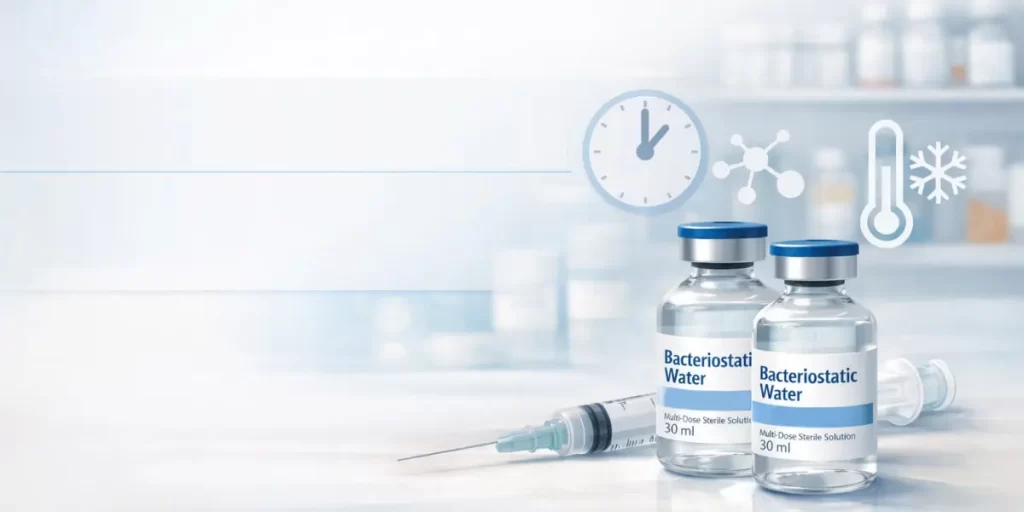
If you run a clinic, medical spa, or a compounding pharmacy, you already know how much details matter when it comes to keeping patients safe and staying compliant. And one of those “small but mighty” items on your shelf is bacteriostatic water. You probably order it by the case (wholesale bacteriostatic water is the smart move when you go through a lot), but have you ever stopped to think about what really happens to that vial after it leaves the manufacturer and lands in your storage room?
Phoenix Meds Inc. been helping clinics stock smart for years, and the number one question I still get is: “How long is this stuff actually good for once we open it?”. So let’s sit down and walk through it and everything you need to know about shelf-life. We will also talk about the 28-day rule. This rule is important. We will discuss storage for your inventory and how to keep it hassle-free.
And I promise I’ll keep it simple to understand for everyone.
But First of All, What Is Bacteriostatic Water?
Bacteriostatic Water is a solution for Injection, USP is sterile water that contains 0.9% benzyl alcohol as a preservative. The tiny amount of benzyl alcohol is the hero because it stops most bacteria (and some fungi) from growing in the vial. This actually keep the water purified after you stick a needle through the rubber stopper. Compare that to plain Sterile Water for Injection (SWFI) which has zero preservative and basically turns into a bacteria prone water the moment you open it. That’s why SWFI is single-use only, while bacteriostatic water gives you multiple doses, up to 28 days if handled correctly.
The FDA-approved labeling on every brand vial says the same thing in the Package Insert: “When reconstituted or diluted as directed, the solution may be stored for up to 28 days at room temperature or under refrigeration.”

The Famous 28-Day Rule – Where It Comes From
People call it the “28-day rule” because that’s exactly what the manufacturer proved during preservative efficacy testing in line with USP <51> and sterility testing under USP <71>. During this process, vials are tested under laboratory conditions that simulate normal clinical use, including repeated needle punctures and exposure to microorganisms. This showed that the 0.9% benzyl alcohol still knocks the microbial count down for a full 28 days. After day 28, the preservative can’t guarantee the same level of protection anymore, so the clock stops there.
Important disclaimer right up front: I’m not your pharmacist or your state board of pharmacy. Always follow your own SOPs and local regulations, because some states are stricter than USP <797>. This article is for general education only and is grounded in the official FDA-approved labeling.
Importance of Preservative Efficacy Testing
Legitimate manufacturers put their products through preservative efficacy testing. This is a rigorous process where they intentionally add bacteria to the solution in a lab setting to prove that the benzyl alcohol actually kills it or stops it from growing.
When you buy wholesale from a trusted source, you are paying for the assurance that this testing happened. If you buy from a source outside authorized distribution channels, you have no idea if that liquid is actually bacteriostatic water if it lack document.
Unopened vs Opened – Shelf Life at a Glance
Here’s a quick table that most clinics tape inside the medication room door. Feel free to steal it.
| State of the Vial | Shelf Life / Expiration | Storage Conditions | Notes |
|---|---|---|---|
| Unopened, sealed vial | Printed expiration date on box (usually 2-3 years from manufacture) | Room temperature (20-25°C), protect from light | Same as any other sterile injectable |
| Opened, first puncture | 28 days from first needle entry | Room temp or refrigerated (2-8°C) | Write the “open date” and “discard date” on the vial in Sharpie |
| After 28 days post-opening | Discard, even if product remains | N/A | Preservative efficacy no longer guaranteed per USP testing |
| Frozen (not recommended) | Do not freeze | N/A | Benzyl alcohol can precipitate; vial may crack |
Best Practices for Bacteriostatic Water Storage in Clinics
Let’s make this practical.
a) Keep unopened cases in a clean, dry area away from direct sunlight. A simple shelf in the supply closet works great. No need for the fridge until you crack a vial open.
b) Once you open a vial (whether it’s a 10ml bacteriostatic water or the handier 30ml bacteriostatic water size), write two dates on the label with a permanent marker:
Date Opened: 10/05/2025
Discard By: 11/02/2025
That little habit has saved more clinics from audit headaches than you’d believe.
c) Temperature? You have flexibility. The official labeling says 20-25°C (controlled room temperature) or 2-8°C (refrigerated) are both fine after opening. Most busy offices just leave it at room temp because it’s one less thing to pull in and out of the fridge.
d) pH stability matters more than people think. Bacteriostatic water sits right around pH 5.7 (slightly acidic) because that’s where benzyl alcohol works best. If you mix peptides or hormones that are very basic or very acidic, the final pH can drift and reduce preservative power. That’s another reason to stay inside the 28-day window. Clinicians should not attempt to adjust pH; this is simply a factor to consider when selecting compatible drugs.
e) Light? The amber glass on some brands already helps, but it never hurts to keep vials in the original carton between uses.
Wholesale Buying and Clinical Inventory Management
Okay, let’s talk business. You are buying wholesale because you want to save money and ensure you never run out of stock. But buying in bulk brings its own challenges.
If you buy 500 vials but you only use 10 a month, you might have stock expiring before you even touch it.
a) The FIFO Method
In clinical inventory management, we live by FIFO: First In, First Out.
When your shipment of Wholesale Bacteriostatic Water arrives, do not just put the new box in front of the old one. It takes five extra minutes, but you need to move the old stock to the front and put the new stock in the back. This ensures you are always using the vials with the nearest expiration date first.
b) Size Selection Strategy
Another way to manage inventory is choosing the right size.
- 30ml Vials:These are great for high-volume clinics. If you are mixing medications all day every day, a 30ml Bacteriostatic Water vial is efficient. You will likely use it up well before the 28-day limit.
- 10ml Vials:If you are a smaller practice or you use the water sporadically, buying 10ml Bacteriostatic Water is smarter. It might cost a few cents more per milliliter, but you will waste less. Throwing away a half-full 30ml vial because you hit the 28-day mark is throwing money in the trash.
c) Tips That Actually Work
Rotate stock. First in, first out. Sounds obvious, but I still see 2023 expiration vials hiding behind newer cases.
Order the right sizes for your volume. If your clinic reconstitutes 5-10 peptides a day, grab the 30ml bacteriostatic water vials. Fewer punctures = lower contamination risk. Smaller offices doing only a couple of injections a week love the 10ml size because nothing sits past 28 days.
Track electronically if you can. Most EMRs or inventory apps let you scan the lot number and auto-calculate the discard date. Takes ten seconds and protects you during an inspection.
What Happens If You Go Past 28 Days?
Nothing explodes, but the preservative efficacy is no longer backed by the manufacturer’s data. If a state inspector or accrediting body asks, you can’t point to the package insert anymore. Most clinics just play it safe and toss it.
Frequently Asked Questions
Q: Can I use bacteriostatic water after 28 days if it still looks clear?
A: The manufacturer and USP say no. Appearance isn’t enough; it’s about proven preservative power.
Q: Is freezing bacteriostatic water okay to extend shelf life?
A: No. Freezing can cause the glass to crack and the benzyl alcohol to come out of solution.
Q: Does refrigeration make it last longer than 28 days?
A: Unfortunately not. The 28-day clock is the same whether refrigerated or at room temperature.
Q: Is all bacteriostatic water the same?
A: As long as it’s labeled “Bacteriostatic Water for Injection, USP” with 0.9% benzyl alcohol from a licensed manufacturer, yes, the rules are identical.
Q: Can I pool two partially used vials to save money?
A: Please don’t. That’s considered compounding and introduces big contamination risks.
Wrapping It Up
Running a clinic is hard enough without worrying whether your bacteriostatic water is still safe on day 32. Stick to the simple rules the manufacturers already proved for us: keep unopened vials at room temp, mark your open date, count 28 days, and toss it when the time’s up. Do that and you’ll sleep easy knowing your patients are getting the same level of safety the FDA signed off on.
If you’re ready to stock up on fresh, pharmacy-grade wholesale bacteriostatic water, ensure products are properly labeled, and supported by full lot traceability that give you plenty of runway.
Disclaimer:
This article is written to help clinic owners and staff understand general, published information about Bacteriostatic Water for Injection, USP, based on FDA-approved labeling and USP standards. It is shared with care and only for educational purposes in licensed healthcare settings. It is not medical advice, not a substitute for your pharmacist’s guidance, and definitely not a replacement for your own standard operating procedures or state regulations.