
VIP (Vasoactive Intestinal Peptide): Information & Coordination for Licensed U.S. Clinics
Home » VIP 10mg
Vasoactive intestinal peptide (VIP) is a naturally occurring peptide that has been studied in scientific and medical research. Its regulatory status must be distinguished from the status of any specific preparation containing the substance.
Phoenix Meds Inc. provides administrative coordination and documentation support for healthcare organizations. This page outlines relevant regulatory information and explains the scope of our services.
What Clinics Should Know About VIP
The FDA’s Global Substance Registration System includes a record for vasoactive intestinal peptide, identified by the Unique Ingredient Identifier (UNII) 6J2WVD66KR.
The FDA states that the existence of a UNII does not imply regulatory review or approval. A substance record identifies an ingredient; it does not establish that a finished drug product containing that ingredient has been approved.
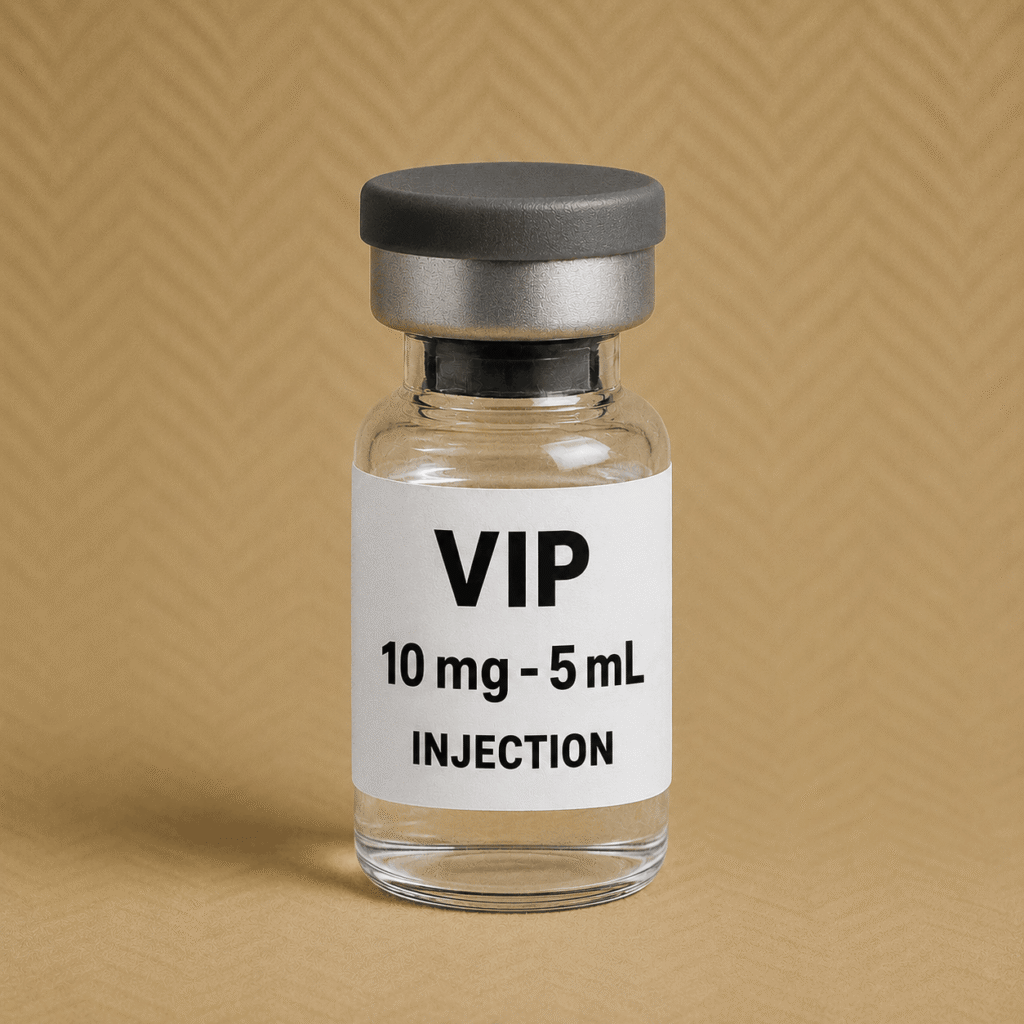
The same distinction applies to a stated strength, such as 10 mg. The amount indicated on a label does not, by itself, establish a product’s approval status, quality, or suitability for clinical use.
Current FDA Regulatory Status
The FDA’s Orphan Drug Designations and Approvals database lists an orphan designation for vasoactive intestinal peptide for acute respiratory distress syndrome, dated March 9, 2001. The record states that VIP is not FDA-approved for that designated orphan indication.
An orphan-drug designation is not equivalent to marketing approval. It should not be presented as evidence that a particular VIP preparation has been approved for clinical use.
The FDA database also lists a separate orphan-drug designation for vasoactive intestinal polypeptide for acute esophageal food impaction, dated June 23, 1993. That record also states that VIP is not FDA-approved for that orphan indication.
Compounding is a separate regulatory matter. The FDA states that compounded drugs are not FDA-approved and that it does not review their safety, effectiveness, or quality before they are marketed. Whether a particular preparation may lawfully be compounded depends on the applicable requirements and circumstances.
Clinics should therefore distinguish between substance identification, drug approval, and the legal requirements governing compounding.
503A Category 1 Status
The FDA’s list of bulk drug substances nominated for use in compounding under Section 503A, updated April 22, 2026, includes vasoactive intestinal peptide under “Category 1 – Bulk Drug Substances Under Evaluation.”
Category 1 status is not FDA approval of VIP or of a finished product containing it. The FDA’s interim enforcement policy applies only when the conditions described in its guidance are met. This listing does not establish that every formulation containing VIP may lawfully be compounded. The applicable requirements must be assessed in the specific circumstances.
Why Product Specific Documentation Matters
Regulatory review should be based on the actual product and its supporting records, rather than a product description alone.
Relevant questions may include whether the documentation clearly identifies the substance and formulation, whether the stated strength is supported by appropriate records, and whether the responsible parties have addressed the applicable regulatory requirements.
A substance identifier or product label cannot independently answer these questions.
How Phoenix Meds Supports Healthcare Organizations
Phoenix Meds Inc. provides administrative support for licensed healthcare organizations. Depending on the engagement, this may include:
- Reviewing clinic and provider credentials.
- Organizing available documentation and supporting records.
- Reviewing publicly available licensing and regulatory information.
- Coordinating administrative communications between professional organizations.
- Identifying documentation questions that may require further review by a pharmacy, clinician, regulatory specialist, or legal adviser.
Our role is administrative. Phoenix Meds does not make prescribing or dispensing decisions, determine clinical suitability, or independently certify a product’s identity, purity, potency, sterility, safety, or effectiveness.
VIP Administrative Coordination for Licensed Clinics
The service areas below describe Phoenix Meds’ administrative coordination services. Phoenix Meds does not grant regulatory approvals or make clinical, prescribing, dispensing, or product-specific compounding decisions. Those decisions remain with the legally responsible professionals and entities.
Clinic Verification
Professional and facility credentials may be reviewed as part of Phoenix’s administrative process.
Documentation Review
Pharmacy Fulfillment
Prescribing, compounding, dispensing, distribution, testing, storage, shipping, and other regulated pharmaceutical activities remain with the parties legally authorized and responsible for performing them.
Frequently Asked Questions
Is VIP listed in the FDA's substance database?
Is VIP FDA-approved for its orphan-designated indication?
What does the FDA substance record tell us about VIP 10 mg?
Does Phoenix Meds determine whether VIP may be prescribed or compounded?
Important Notice
This page provides general regulatory and administrative information. It is not medical advice, a treatment recommendation, or a legal opinion. Nothing here establishes that a particular VIP preparation is approved, safe, effective, or eligible for compounding.