
GHK-Cu + BPC-157 + TB-500 + KPV Information for Licensed U.S. Clinics
Home » Medication Information » Skin, Hair & Aesthetic » KLOW
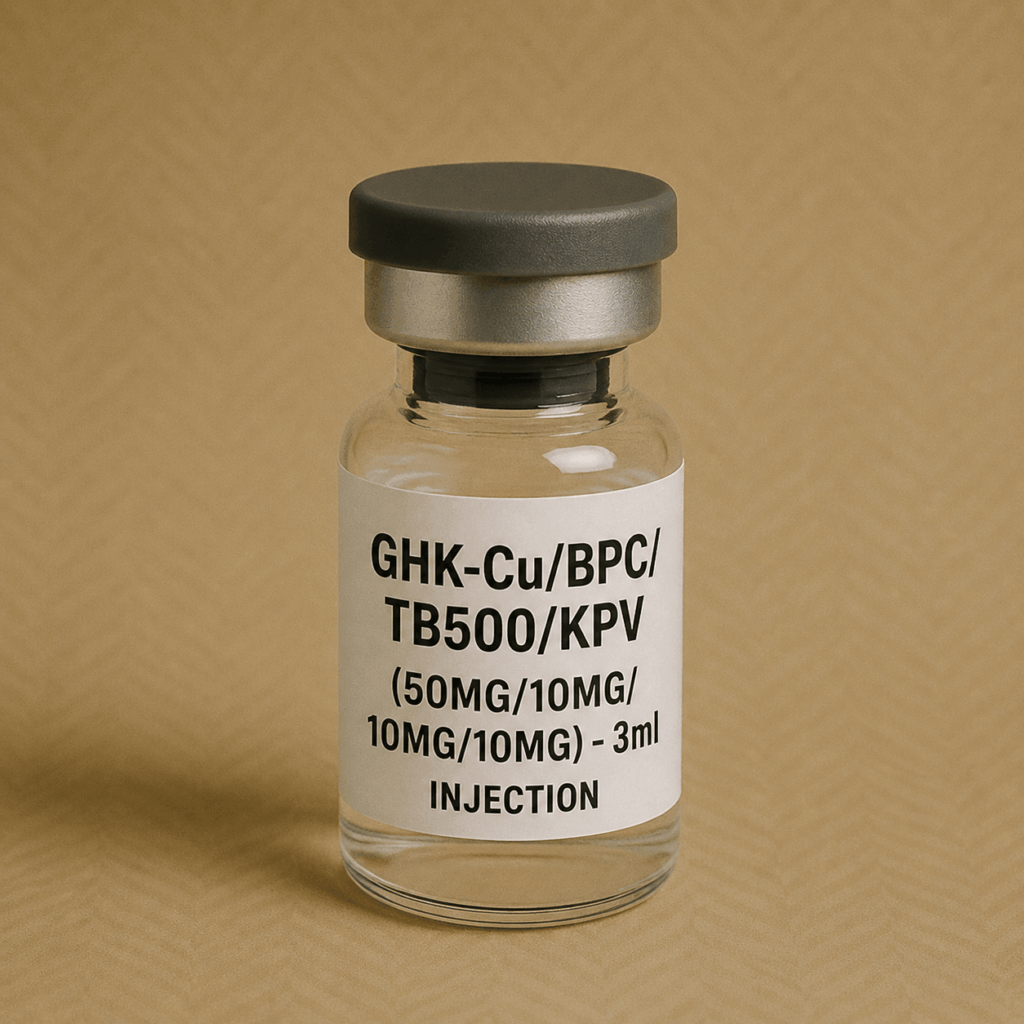
On this page, “KLOW” refers to a proposed multi-ingredient preparation containing GHK-Cu, BPC-157, TB-500, and KPV.
These substances have different regulatory histories. FDA evaluates the individual bulk drug substances separately, and their inclusion in a multi-ingredient preparation does not create a separate FDA approval or establish that the combination qualifies for a particular compounding pathway.
Phoenix Meds Inc. supports licensed healthcare organizations with credential review, documentation, publicly available regulatory information, and administrative coordination.
We are not a pharmacy, medical practice, manufacturer, prescriber, compounder, or dispensing entity.
What Clinics Should Know About the KLOW Combination
A commercial or shorthand name for a peptide combination does not determine its regulatory status.
The FDA materials relevant to GHK-Cu, BPC-157, TB-500, and KPV evaluate those substances individually. Those materials should not be interpreted as establishing a separate FDA approval or 503A status for a four-ingredient preparation referred to as “KLOW.”
The route of administration also matters.
FDA currently lists GHK-Cu except for injectable routes of administration in Category 1 of its interim 503A framework. Injectable GHK-Cu does not share that Category 1 status.
BPC-157, TB-500, and KPV have separate 2026 FDA evaluations that should also be considered individually.
Phoenix does not present the KLOW combination as an FDA-approved treatment or promote it for recovery, tissue repair, inflammation reduction, wound healing, collagen production, angiogenesis, anti-aging, or similar clinical outcomes.
Current FDA and Compounding Considerations
GHK-Cu
FDA’s current 503A framework places GHK-Cu except for injectable routes in Category 1 while the substance remains under evaluation.
Category 1 is not FDA approval and is not equivalent to final inclusion on the 503A Bulks List. FDA’s interim policy describes conditions under which the agency generally does not intend to take enforcement action while Category 1 substances remain under evaluation.
Injectable GHK-Cu is treated differently. FDA states that compounded injectable GHK-Cu may pose immunogenicity concerns related to aggregation and peptide-related impurities and notes that human safety data are limited.
BPC-157
FDA evaluated BPC-157 free base and BPC-157 acetate separately in 2026.
FDA notes that the nominations were withdrawn but continued evaluating both substances on its own initiative. FDA’s evaluation also addresses issues involving substance identity, safety information, and the proposed 503A status of the substances.
TB-500
FDA evaluated TB-500 free base and TB-500 acetate in 2026 and proposed that neither substance be included on the 503A Bulks List.
FDA also identifies concerns involving product identity and inconsistent naming of TB-500-related bulk drug substances.
KPV
FDA evaluated KPV free base and KPV acetate separately in 2026.
Neither has an applicable USP/NF drug-substance monograph, and neither is a component of an FDA-approved drug. FDA concluded that the evaluation criteria weighed against adding either substance to the 503A Bulks List and proposed that neither be added.
FDA also reported that it had not identified clinical studies or human-exposure data for KPV by any route of administration.
FDA’s July 2026 staff recommendations regarding BPC-157, TB-500, and KPV were part of the 503A evaluation and advisory-committee process. They should not be described as final FDA bans or final exclusions from the 503A Bulks List. FDA states that it will make a final determination after the advisory process and completion of its review.
Why Route & Formulation Matters
The four ingredients should not be treated as though they have identical compounding histories.
For example, FDA’s present Category 1 designation for GHK-Cu specifically excludes injectable routes.
Likewise, FDA’s 2026 KPV review concerned nominations involving topical cream and gel preparations for proposed wound-healing and inflammatory-condition uses. That FDA evaluation should not be interpreted as establishing a 503A status for KPV used in a different dosage form or as part of an injectable multi-ingredient preparation.
For that reason, Phoenix does not use the regulatory status of one ingredient, route, or proposed dosage form to make claims about the regulatory status of the entire KLOW combination.
How Phoenix Meds Supports Licensed Clinics
Phoenix’s role is administrative.
We may help licensed healthcare organizations organize professional credentials, review available documentation, locate relevant publicly available regulatory information, and identify questions or inconsistencies that require further review by the appropriate licensed or regulatory professional.
Our support may include:
- professional and facility credential review;
- organization of available product documentation;
- review of publicly available FDA and licensing information;
- administrative communication regarding documentation; and
- identification of matters requiring additional clinical, pharmacy, regulatory, or legal review.
Phoenix’s administrative review is not FDA approval, pharmacy accreditation, a clinical recommendation, or a legal opinion.
Safety and Documentation Considerations
The individual ingredients present different safety and evidentiary considerations.
FDA identifies potential immunogenicity concerns for compounded injectable GHK-Cu because of aggregation and peptide-related impurities.
FDA’s current materials also identify safety concerns and information gaps involving BPC-157 and TB-500. For KPV, FDA reported that it found no clinical studies or human-exposure data and therefore could not determine the potential safety risks associated with human use.
Phoenix does not manufacture, test, compound, dispense, store, ship, or take custody of these substances.
We also do not certify the purity, potency, sterility, authenticity, safety, or clinical suitability of a peptide preparation.
Documentation provided by another entity should be evaluated for what it actually establishes rather than presented as a blanket quality or compliance guarantee.
KLOW Blend Administrative Review for Licensed Clinics
Clinic Verification
Documentation Review
Once approved, select the peptide GHK-Cu/BPC/TB-500/KPV (KLOW) category within our secure portal to view available coordination pathways.
Licensed Parties
Prescribing, compounding, dispensing, distribution, storage, shipping, and other regulated medication activities remain with the parties legally authorized and responsible for performing them.
Frequently Asked Questions
Is the GHK-Cu + BPC-157 + TB-500 + KPV combination FDA approved?
The FDA materials cited on this page evaluate the individual bulk drug substances rather than establishing FDA approval for the four-ingredient KLOW preparation.
Does GHK-Cu's Category 1 status apply to an injectable KLOW blend?
No. FDA’s current Category 1 listing specifically applies to GHK-Cu except for injectable routes of administration.
What is FDA's current position on KPV?
FDA evaluated KPV free base and KPV acetate in 2026 and proposed that neither be added to the 503A Bulks List. FDA also reported that it had identified no clinical studies or human-exposure data for KPV by any route.
Does KPV's FDA review establish a pathway for injectable KPV?
No. The dosage forms described in FDA’s KPV nomination materials were topical cream and gel. That review should not be extrapolated to an injectable KPV-containing blend.
What is FDA's current position on TB-500?
FDA proposed that TB-500 free base and TB-500 acetate not be included on the 503A Bulks List.
Does Phoenix Meds compound or dispense the KLOW blend?
No. Phoenix does not compound, manufacture, dispense, test, store, ship, or take custody of these substances.
What does Phoenix Meds help clinics with?
Our role is administrative and may include credential review, documentation organization, review of publicly available regulatory information, and professional communication concerning that documentation.
Important Notice
Phoenix Meds Inc. provides administrative coordination, documentation, and compliance-focused support for licensed healthcare organizations.
We are not a pharmacy, medical practice, manufacturer, outsourcing facility, compounder, prescriber, or dispensing entity.
This page is intended for professional informational purposes. It does not present GHK-Cu, BPC-157, TB-500, KPV, or their combination as an FDA-approved treatment and does not establish that any particular preparation, route of administration, compounding pathway, or distribution pathway is available or permitted.
Regulatory References
- Bulk Drug Substances Nominated for Use in Compounding Under Section 503A of the FD&C Act — Updated May 14, 2026
- Certain Bulk Drug Substances for Use in Compounding that May Present Significant Safety Risks
- July 23–24, 2026 Pharmacy Compounding Advisory Committee Meeting
- FDA Briefing Document — BPC-157-Related Bulk Drug Substances (BPC-157 Free Base and BPC-157 Acetate)
- FDA Briefing Document — TB-500-Related Bulk Drug Substances (TB-500 Free Base and TB-500 Acetate)
- FDA Briefing Document — KPV-Related Bulk Drug Substances (KPV Free Base and KPV Acetate)
- Bulk Drug Substances Used in Compounding Under Section 503A of the FD&C Act